Ourselves After Trauma

Have you lived through trauma?

I once attended a workshop, where I was required to do that ‘introduce yourself to the group’ thing. I’ve always hated that, usually sticking to a short ‘name, rank and serial number’ type of short speech. For some reason (perhaps it was just the right time), I found myself for once, opening my mouth without a censor.

So I said ‘Who am I? Good question. I’m still learning the answer to that myself. I have changed. I am not the woman I used to be. I refuse to be scared anymore. Scared that people won’t like me if I’m real. I’m not going to hide anymore. I won’t do only what is expected of me and I won’t stay in a box of my own construction. I am breaking out of that prison and I’m never going back.’

Encouraged by the reception I got, I shared a little more of myself. Who I am now, having gone through my own personal traumas. The opinions and approval of others is no longer a necessity in order for me to function. I don’t measure my worth by anyone’s standard but by own. I allow myself to be seen. The authentic, real me, not the woman who measured every word, afraid of narrowed glances and disapproval.

I don’t care anymore. My self-worth is based on what I think of myself, not on what other people think. I’m a bit of a rebel and I no longer apologize for that. I’m happy. But that’s incidental because even if I wasn’t, there’d be no going back. I will never again be who I once was because of everything I’ve experienced.

The thing is, life’s challenges shatter and open us. And like seeds, we can grow from the opening.

The death of a child, spouse or parent, a serious illness or accident, escaping an unhealthy, abusive relationship, overcoming an addiction, surviving huge financial loss, the ending of a relationship that forced us to face who we really are instead of who we were pretending to be; these and other similar events change us. We live through them and if we are open enough, they leave us altered.

These challenges force us to pause and reassess. They get our attention and make us re-evaluate everything. Where we are in our lives. Who we are, and who we want to be ‘beneath the mask’ as Christopher Monte put it.

We are shaken up. After my life seismically shook, I wanted personal change. Not to become someone else, but to be a better version of myself. To re-connect with the compassionate, creative me. Flawed but unique. And worthwhile.

I wasn’t the same anymore and I needed to get in touch with this new woman.

IMG_1478

Crises happen for a reason. Losses change us. Pain alters us. We grow from being forced to break open.

Of course there are exceptions. People who cannot or will not accept the potential of transformation. They remain closed and that is their choice. But they are missing a trick.

Our energy changes through crises. And the energy of the people around us changes in unconscious response.

A friend lost a daughter. She told me her entire family dynamics changed when her daughter died. You can’t lose a child or a spouse and not be changed forever at your innermost centre.

If you have a loved one, whether friend or family, whom you are trying to support through a traumatic life-event, accept that they will not emerge unaltered. They will be different to the person you used to know, so you have to accept that.

The extent and nature of the change will depend on them. They may grow through the experience. Or they may spiral out of control. But for the most part, they will be less likely to conform. They will probably refuse to allow anyone to push them into decisions, or to toe the line. To do what they ‘should.’ You may hear them say ‘I don’t care anymore’ or ‘Life’s too short.’ They will be different. It’s common for loved ones to find themselves saying ‘What’s going on? This isn’t you.’ Wrong. This isn’t who they were.

I have no doubt that the path I am now on is far greater than I could ever have envisioned before the trauma that fired me.

Image result for seed cracking open

(Photo from tinybuddha.com)

You must accept the new them if you want to keep them in your life. Give your support to this new person. Love them for them. This person was forged in a fire, born out of deep trauma and pain.

They are on a journey of self-discovery and personal growth towards their most authentic self. Towards who they really are.

Who I really am.


~


9 Ways to Empower Yourself

Sometimes, especially when our world feels chaotic and uncertain, we start to feel that we are powerless. But we can take back our control.

Here are some suggestions to empower yourself:

    1. Empower yourself with a sense of purpose.

Anecdotes from people who have survived great challenges suggest that those who have a purpose outlast the others. Having a purpose to keep on going, a goal, something to aim for is a great motivator and offers a kind of emotional sustenance. So give yourself a goal. A reward to aim for. A reason to keep on keeping on.

 2. Empower yourself by finding a balance.

Therapists often seem to suggest that in order to cope, we must feel positive at all times. It’s all about Positive Mental Attitude. But in truth, it is more realistic and healthier to strive for balance. Positive thinking is important, and motivates us to work towards the things we want. To make them happen. Many believe that in being positive, we can actually attract good things to ourselves. But negative thinking also plays a role if we keep a sense of perspective and don’t allow ourselves to wallow. Seeing the negatives in a given situation can be very useful in helping us to identify the flaws in a plan and see where things could go wrong. From there it’s a simple step to make plans to deal with them.

3. Empower yourself by embracing compassion.

It has been said that if your compassion flows always outward and neglects yourself, it is incomplete. Being kinder to yourself and others, keeping your internal dialogue loving and positive, reduces negative, destructive emotions and vibrations and nurtures wellbeing. Let your inner voice speak to you with love and understanding. Giving to others, always within healthy boundaries, enriches our sense of satisfaction with our lives and allows our spirit to flourish.

 4. Empower yourself with tiny steps and small bites. 

Q: ‘How would you eat a cabbage mountain?’

A: ‘One bite at a time.’

Life’s trials and challenges may build character, but they can also deplete and overwhelm us. To survive intact, or even stronger, it is wise to take it one bite, one step, one thing at a time.

We may feel frustrated and impatient but those tiny steps and little bites add up. By keeping an eye on our ultimate aim, by breaking down a task into small, manageable, achievable steps we can stay focused and able to cope.

 5. Empower yourself by taking ownership of what you can control; let go of everything else.

To be strong, we must accept responsibility for our lives. For our choices and their consequences. But it is destructive to take responsibility for everything.

Some things are beyond us, and that includes the way other people may feel, act or react to us. Manipulators will try to embed a sense of guilt in us by endeavouring to make us responsible for their anger, hurt or behaviour. Tune them out. Get out of your comfort zone and stretch yourself. Get outside and breathe some air. Be in the moment and really look around you. Learn something new and gain a skill. Take charge and be proud!

6. Empower yourself by quieting the need to ‘over-think’ everything.

We need to give the people and things we care about our time, energy and attention. But there’s no need to go to extremes. Over-thinking everything can drive us crazy. Most of what happens around us has very little to do with us, although in our social-media obsessed world, the need to reference ourselves in nearly every situation is a modern habit. If we teach ourselves to take a breath and step back, we are free to reject the habit of potentially anxiety-inducing over-personalization.

7. Empower yourself to eliminate ‘neediness.’

Teach yourself the difference between wanting and needing. We all want to be liked. Problems arise when that want becomes a need. If we become dependent on the opinions and validation of others, we find it difficult to function effectively without them.

Even the strongest of us may want approval. But we don’t need it.

8. Empower yourself to ask for help when necessary.

Being strong doesn’t mean that we have to be a human island. There is strength in weakness. Everyone needs help sometimes. When you do, accept, acknowledge and ask for it.

9. Empower yourself to say no to self-pity.

If we allow ourselves to wallow, lost in a mire of self-pity, our mental energy drains away and we are in danger of sinking into quicksand. By acknowledging our pain, we accept it. Impose a time-limit. Tell yourself that it’s okay to be hurt, angry, disappointed, and to think it through, to learn the lesson it contains. Then take a breath and remind yourself that it is now a part of your past. Write down what you’ve learned, and the ways you can avoid the pitfalls from now on. Wallowing keeps you stuck. Take a step towards your future and reward yourself with something you enjoy.

You can do this!


Sound the Retreat!

On sunny Summer days I often wonder whether it would be fun to book myself into a writing retreat. The idea of spending a few days away from the reality of everyday life, ensconced with like-minded folk and given permission-even encouraged-to concentrate purely on writing appeals greatly.

I read the reviews of several of these, and they do seem excellent but I couldn’t help wondering… It’s not the most usual choice of career path is it? I mean, people don’t say ‘I’ll be a doctor, or a lawyer, or a chiropodist, or maybe I’ll run a Writing Retreat…’

So; What makes someone want to run a writing retreat?

A Writing Retreat is a venue offering a facility for a group of writers to gather, share, and write in an atmosphere conducive to that, away from the distractions and demands of everyday, normal life, supported by fellow writers. Writers can make progress on ongoing projects or learn a new skill. Often guest writers attend and offer a talk or advice and tutoring.

Retreats also exist for those with other interests, such as Art, Meditation and Yoga. All offer a chance to escape from the demands of one’s usual life and focus on a personal passion.

To be classed as a retreat, most offer an experience lasting at least a few days, and include within that, accommodation and food, although some (such as Urban Retreats), have a one-day format.

Anyway, I decided to jump down off my fence, and research several of those based here in the UK. I contacted two local concerns, The Writing Retreat based in Cornwall and the Arvon Foundation at their Totleigh Barton, Devon venue.

  • The Writing Retreat in Cornwall.

I spoke to Jane Moss, the retreats co-founder and director. About 3 years ago she set up The Writing Retreat with her friend Kath Morgan at Rosemerryn at Lamorna in far west Cornwall. They also have a venue at Bosloe. They started by running a pilot.

They run a Blog on WordPress linked to their website:

https://thewritingretreat.co.uk

Jane is lovely and full of passion. It shines through. She told me,

‘Both of us tutors have MAs in creative writing and many years’ experience between us of running writing courses and workshops.’

Jane has co-hosted other retreats, at Ty Newydd in north Wales, for Lapidus and NAWE. Kath has a teaching background.

‘I’ve run writing groups in the community and have been a tutor in adult education and a visiting lecturer at Hertfordshire University.’ Jane went on.

Kath has an agent for her novels and Jane is published in poetry, short memoire and a creative handbook for counsellors using writing as part of therapy.’

See www.janemoss.com for more information.

‘We both know our way around the publishing worlds – I worked in publishing as a copywriter and editor for much of the 1980s and 90s. I have training as a provider of bereavement support and a good understanding of counseling and writing for therapeutic benefit. I was on the board of Lapidus (www.lapidus.org.uk) for three years and have run writing groups for hospices, carers organisations and Macmillan.’ Jane said.

Both women are used to facilitating groups and working in a one-to-one, and in situations in which people may be expressing difficult thoughts and feelings through their writing. They use icebreakers and a variety of welcome exercises to help people settle in, and strive to set a positive, warm and supportive tone from the guests’ first arrival.

They astutely saw that they’d need a unique selling point-something to make them stand out. Their USP is that they are a ’boutique’ experience. Luxury.

Jane made me smile when she said she and Kath asked themselves ‘What kind of retreat would I want to go to myself?’

They even have a helper who is a trained chef. She comes in ‘on the day’ to do the final preparation and service for the meals cooked by Jane and Kath, enabling them more time to concentrate on the writing programme. A guest recently described the Writing Retreats food as ‘hotel standard’, which Jane said made them very proud.

(Photo courtesy of The Writing Retreat)

They have a Narrative Structure workshop coming up this year 31st Oct – 5th Nov 2016 at Rosemerryn, Cornwall

The cost is £655 for a double room, or £575 for a twin room. If two people want to attend together, sharing a room, the cost of a double is £495 per person or the twin £450.

Kath and Jane say they try to accommodate keen aspiring writers on low incomes too and invite anyone in that position to contact them directly.

The November retreat is for those who have already spent time working on a substantial draft of a novel or longer memoir. Morning workshops provide the tools to plan and revise structure, identify plot points and theme, and use back story and sub plot effectively.

One-to-ones take place with the tutors in the afternoons. Jenny Alexander will be the guest author for this retreat. She will join everyone for dinner on the Wednesday evening and run a workshop on Thursday morning. After breakfast, Morning workshops start promptly at 9.30am in the studio, with a break for coffee and tea at 11.00am.

Lunch is daily at 1.00pm, followed by free writing time in the afternoons and one to one sessions of 50 minutes each with Kath and Jane. Dinner is at 7.00pm, followed by a variety of talks and readings. On the final evening, guests are invited to read after dinner, if they wish.

  • The Arvon Foundation Totleigh Barton venue.

In a 16th century manor house, a few miles from Sheepwash, Devon, Arvon runs writing retreats which are generally considered to be the ‘Gold Standard.’ They have other centres in Inverness-shire, Shropshire and Yorkshire and have been around since 1968. If you want to see for yourself, their site is at

http://www.arvon.org/totleigh barton

I was very fortunate to speak to Mary Morris, the Devon Centre’s Director. She told me,

‘I got involved in Writing Retreats originally from a background working in Publishing in London, mainly literary fiction. I felt at the crossroads of my career path and wanted to get out of London. At just the right time, the job at Arvon came up and everything fell into place.’

Mary said she loves talking to writers about their craft. Loves to see the transformation in them and their work. Loves working in an atmosphere full of creativity and self-expression. Arvon has guest writers to run workshops throughout the year, the highest calibre of writers. She is proud of that and of Arvons ethics and integrity; that was a major factor in her choice to work for them.

(Photo courtesy of Arvon Facebook page)

‘They have a long history-nearly fifty years. Ted Hughes was in at the beginning-him and his house in Yorkshire. The Ted Hughes Arvon Centre, Lumb Bank is an 18th-century mill-owners house in West Yorkshire, which once belonged to him.’

Mary also said she likes being able to provide a space and time where anyone longing to write can abandon their everyday responsibilities and concentrate solely on getting creative. On writing.

She likes the feeling of community. Everyone ‘mucks in’ with things like cooking. And she likes that they have funding help. They get about 60% income from the courses they run and money from the Arts Council (they are counted as a key organisation – supported). They also run a ‘Friends of…’ scheme which feeds into their grant scheme. And they’re open 45 weeks of the year.

Mary was really enthused with what she does and I found that inspiring and reassuring.

So…that’s the ‘Arvon Lady.’ In a nutshell.

Typically an experience has around 15 attendees, and runs from Monday afternoon to Saturday morning. Afternoons are spent writing and in one-to-one tutorials.

An example of one of their retreats takes place July 18th-July 23rd 2016 – A Fiction and Tutored Retreat.

This retreat offers a chance to really focus on fiction writing amid supportive and inspiring peers. Tutors will offer advice tailored to the individual and in one-to-one format, on subjects like voice, structure and control. There’s also ample opportunity for private work.

You’ll pay £750 for a single room or £700 for a shared one.

There’s a Grants scheme that, last year, was able to help 90% of applicants, available at Totleigh Barton. Priority is given to first time attendees but application must be before the end of April each year.

Here’s a typical itinerary:

Monday 4.30pm to 6pm – Arrive. After dinner, a general introduction by tutors.

Tuesday – Evening; tutors read from their own work.

Wednesday – Evening guest speaker.

Friday – Evening; group gathers to share and celebrate work.

Saturday – Leave after Breakfast.

Kat Brown, a journalist and freelance writer, experienced Arvon three years ago.

‘I went to Arvon in desperate need of a holiday. I came back feeling calm, confident and ready to work on a story and characters that I felt properly invested in.’

(Taken from Kat’s blog – http://exoticmaypole.com)

Other retreats that I also researched include;

  • Retreat West

Amanda Saint started Retreat West in 2012, and it focuses on reading and writing fiction, with provision of helpful workshops. Competitions are run too, with literary agents as judges, said to be ‘a chance to avoid the slush pile.’  Typically a four-night experience with masterclasses, costs around £625

www.retreatwest.co.uk


  • Swanwick Writers Summer School, Derbyshire

One of the oldest residential writers’ schools in the world, Swanwick was founded back in 1949. Every year in August, a week-long writing retreat is offered here, where a wide range of courses and workshops are run. This year, it is from 6th-12th August. There are journalist-led panels, and others run by agents and bestselling authors. This years speakers include John Lamont, Simon Hall, and Michael Jecks. At the historic 19th century Hayes Conference Centre in Swanwick, Derbyshire surrounded by a lake and landscaped gardens, a peaceful environment is provided to soothe even the most stressed of us, and the Summer School typically attracts around 300 writers. Novelists, poets, playwrights, journalists, comedy-writers and biographers get together to renew old friendships and build new ones.

Some ‘insider info:’

First attenders wear white labels. This is to indicate that they may need some assistance to find their way around, not that they are inexperienced writers. Some people can feel rather overwhelmed at finding themselves surrounded by 300 unusually eloquent strangers. The advice is to stick it out. Once the magic of Swanwick takes over, all falls into place. A variety of evening social activities are offered too, along with innovative ideas like a way for shopping online to benefit the school and a gift vouchers scheme.round the conference centre, not that they are inexperienced writers. Some people, quite understandably, can be overwhelmed by suddenly finding themselves in the midst of over 300 unusually eloquent strangers. The advice is to hang in there, once the Swanwick magic takes over all will be well. An important part of the week for many is taking part in the vareity of social activities arranged in the evenings, such as dances, quizzes and entertainments. Excursions are available on the Tuesday afternoon. round the conference centre, not that they are inexperienced writers. Some people, quite understandably, can be overwhelmed by suddenly finding themselves in the midst of over 300 unusually eloquent strangers. The advice is to hang in there, once the Swanwick magic takes over all will be well. An important part of the week for many is taking part in the vareity of social activities arranged in the evenings, such as dances, quizzes and entertainments. Excursions are available on the Tuesday afternoon.novelists, poets, playwrights, short story writers, comedy writers, journalists, biographers and more gather together to renew old friendships and forge new ones.

novelists, poets, playwrights, short story writers, comedy writers, journalists, biographers and more gather together to renew old friendships and forge new ones. novelists, poets, playwrights, short story writers, comedy writers, journalists, biographers and more gather together to renew old friendships and forge new ones. Prices start at £445 for the whole week, in the main house accomodation or £90 for day visitors. Their website is

http://www.swanwickwritersschool.org.uk/

Moniack Liltarlity, Scotland

Residential Courses are run at Moniack Mhor. The centre is home for the duration, free from distractions within a nurturing writing community. Tutored Courses start from £325 for a 3 night course and £540 for Mon-Sat.

Grants are available to help with course fees on all courses.

Residential courses run with up to fourteen writers and each is tutored by two established, experienced tutors. All courses have one-to-one tutorials except the untutored retreats. At least one half hour tutorial is included with each tutor during your stay.

So; there is plenty of choice with something for everyone ‘out there.’ I focussed mainly on the West Country, here, Devon and Cornwall, but writing retreats can be found all over the UK and beyond with enough individuality to offer something for everyone who wants to find their inner scribe. Enjoy!

10 Ways To Start Over In A New Place

They say it’s one of the most stressful things we can do, yet many of us relocate more than once in our lives.

For some, it’s fun and easy and it can be a great adventure! But others find it harder, often left feeling lonely and finding it hard to integrate themselves into a new area. There are many reasons and much to consider. The UKs North-South divide is not only alive-and-well but also far broader and wider-ranging than in previous times. So it can be a bit of a culture-shock even for someone who is only moving from one area of England to another, never mind between countries.

If you have work outside of the home, or have children in school, the transition may be smoother, as both offer ways to make new contacts. But we have moved several times over the last ten years and as I work from home, and have no children, those avenues weren’t available. I’m sharing some of the strategies I have picked up along the way, in hopes that they may be helpful for anyone in this position. Feeling lonely and isolated is horrible. If you are feeling that way and have lost all motivation, do please seek some outside help from a GP or helpline. Anything. But take a first step towards changing things. You deserve a happy and full life. If you’re ready  for a fresh start-here we go!

Tips For A New Start:-

  1. Research your new area on-line. Is there a town or village website with local information? Is there a group or activity you could join?                                                             
  2. Go for a walk every day. Not only will you more quickly learn your way around your new area, but you will start to see familiar faces to say ‘Hi’ to as well. You could even find a local group of ‘ramblers’ to join in with if you prefer. A dog makes this easier, but if you can’t have or don’t want a pet, walk anyway. It’s a great mood lifter, healthy exercise-and it’s free!                                                                                       
  3. Check whether there are any ‘MeetUp’ (http://www.meetup.com/) activities in the area. They can be a great way to join in with something that interests you. One of their tag-lines is ‘Use the internet to get off the internet.’ They are a relatively new idea but are growing all the time! They match your area to activities and groups that may interest you. If MeetUp hasn’t found you yet, you can start a group yourself.                                                                                                                                                    
  4. See if your area has a parish magazine. They are a great source of local information and upcoming events.                                                                                                                   
  5. If you have a passion-consider sharing it. Others may be delighted to have a new ‘Book Club’ or ‘Foody Club’ to join.                                                                                         
  6. It’s predictable, but it does work-consider a few hours a week doing some kind of ‘volunteering.’ You meet like-minded folks and in some areas, can be more fun than it sounds. Organisations like the National Trust are always on the look-out for people to help maintain some of the most beautiful places in the country. Not a bad way to find your feet.                                                                                                                      
  7. If the neighbours seem pleasant, ask them round for coffee. They say ‘community’ is no longer strong, but we’re the only ones who can change that. I’ve had some lovely neighbours who remain in touch even though we moved.                                      
  8. Don’t forget your old friends. Just because you’re no longer close physically, there’s no reason not to remain close to your friends emotionally. Thank goodness for our modern age; Phones, Facebook, Email, Skype, Facetime and all our other technology make keeping in touch easier than ever.                                                           
  9. Set yourself goals, however small and give yourself things to look forward to. Whether it’s exploring a new area in the countryside or joining the local library, keep taking steps forward. It’s all progress!                                                                          
  10. Give it time. Don’t let yourself get disheartened if it seems to take ages to settle into your new home. It will happen and you are worth it.IMG_0379

Be happy and prosper in your new life!

We Can All Be That Person

It’s Christmas time and it can feel as if the whole World is joyful. Except for you. That no-one can understand your sadness, especially now. That you are so alone.

Please, hold on.

Not everything has a reason that can be found or seen and you can drive yourself crazy trying to make sense of some things. Sometimes, things simply are. There is no reason and it can be a waste of time and energy to seek it. Some things are beyond ‘fixing.’ They cannot be mended or put right. They must be endured and borne.

Bearing them is painful. It’s a form of grieving. And grief is brutal. Harsh. Raw. But we have to walk through it. Even though when it hurts, it’s an open wound which for the longest time seems impossible to heal.

Walk through it.

Whether it’s the end of something, a marriage, a friendship, an affair; or the loss of a loved one, or a livelihood; or whether it’s being forced to face betrayal from someone close, it is devastating. Debilitating. We feel as if we’ve been kicked in the guts. Keep breathing, a moment at a time. Those moments add up.

Walk through it.

These terrible, hurtful experiences do in some cases lead to personal growth. But it is simply not true that in order to grow we have to smile through awful pain. It can leave us so wounded and depleted, it’s all we can do for a time to just keep on breathing. We don’t live through that shadowy time. We exist. But we endure. We go on. We grieve.

Loss; of health, loved ones, friendships and more, has not magically improved me as a human being. At times it has done the reverse. I have felt embittered. Resented people. Hated them. I’ve felt some of the softness within me turn to hardness. There is no comforting ‘trade-off’ as a reward for the pain.

I am more aware of the pain of others but also more inclined to protect myself. I feel a certain cynicism. And I’m far less patient, especially with people who it seems have led a charmed life, untouched by worry or trauma. This is intensified at Christmas.

The pain from my painful experiences won’t disappear, but I’ve harnessed its energy and I use it. I’ve dug deep and written it into my work and my life. But it would feel disrespectful and trite to say I ‘needed’ the bad experiences in order to become who I am. Like trivialising the loss of my loved ones. Or the battles fought by others, similar to my own, who may not have made it through. So far.

I don’t have enough arrogance to believe that I was ‘spared’ just so that I could ‘help’ others in some way. And it certainly has nothing to do with strength, or taking responsibility, because others are stronger and more responsible than I could ever be. But too often, I’ve heard people in pain being told to ‘take responsibility’ for their feelings in order to get better and it makes me mad!

You don’t ‘take responsibility’ for losing a loved one, or for having cancer, or for being assaulted or betrayed.

You take responsibility for what you do afterwards. For your own actions and your own life. But you don’t choose whether or not you grieve. That hell is within. There’s no escape. We cannot control the uncontrollable. At this time of year that can feel simply too much to endure.

So what can we do when we’re in the midst of so much pain? Either experiencing it or seeing it in a loved one?

We can avoid the trite easy fixes. The ‘pull yourself together/it’ll get better/it’ll make you stronger/we’ve all been there’ toxic rubbish.

By repeating the cliches, however well-meaning we are, we’re denying the person who is suffering, whether a loved one or ourselves, the right to feel. To be angry. To grieve. And that takes away from someone who is already depleted, just when they are weakest.

I’ve been brought to my knees by grief at times. It’s overwhelming. So draining I thought at my lowest that all hope was gone. That it would literally kill me. I am not the same as before the grief. In some ways that is good but in others, not so much.

The ones who helped me, who really, really, helped me, who saved me-were the ones who sat with me. Who were simply there. When it would have been so easy to run for the hills.

They didn’t have answers. They didn’t ‘fix’ me. They stayed with me and gave me their greatest gift. Themselves. Their presence. A shoulder. An ear. A hug.

I survived grief-no, I AM SURVIVING grief-because people loved me. To some; my husband and my best friends, I owe the most, because they were there the most. But all helped and all played their part. They loved me without words. They suffered with me, and gave me their presence, even when I was at my worst and least lovable. They stayed. They loved me enough to be willing to cry with me. Hold me. Suffer with me. Open themselves up in the least comfortable ways. Bleed too.

It may have been a morning of their life. An hour of their day. A few minutes of their night. They have no idea how vital, how powerful that time was.

Change and growth have happened for me, because I have been allowed to grieve. Grief does not block or damage. It isn’t an obstacle.

Yet in our society ‘grief’ is treated as a problem. To be ‘got over.’ People are embarrassed by it. They don’t know what to say, how to react. They are desperate to make it go away. To cure it. But grief is not a problem, it is necessary. Normal. Healthy. Essential. We instinctively try to avoid it because it’s painful. We even try to ignore it.

So when you’re faced with tragedy, you find that people often simply disappear. Or worse-they trot out all those old easy clichés.

What can we do? What can we offer to someone in all that pain?

Well for a start don’t try to make it go away. The last thing they want or need is to be ‘fixed,’ to have their pain minimalised or trivialised by your ‘good intentions.’ For someone who is suffering, it takes great courage to venture anywhere near to other people. They can be so crass, so unintentionally cruel.

What you CAN do, is let them know that you are there, available to them.

You can say, ‘I am here. I am with you.’ And mean it. Be there with them.

Be with them. You don’t have to actively ‘do’ anything. Being present, willing to suffer alongside them, is incredibly valuable.

Simply showing acceptance, acknowledging grief, is so powerful and such an unselfish and powerful act of love towards another. You need no special training courses, no extra skills. Just to care enough to be present for as long as you’re needed. There is no time limit on grief and anyone who tries to tell you that there is never had a piece of their heart ripped out, leaving an open, bleeding wound.

Just be there. Even when it feels awkward. When you feel useless. Stay. You are so vital at those times. This is where the recovery and the healing starts. When others are willing to share the pain. When they will grieve alongside us.

When you are in pain, when you need such people, please, dig deep and find enough motivation to ensure you find them. They are there, but you may need to look hard. If you feel totally alone, go to your GP. Ring a helpline. Love yourself enough to get the help.

And if you don’t need someone to be there with you right now, if you’re lucky enough not to be grieving, then please look around you and if someone else does- please be that person.


5 Ways To Survive A Narcissist

Survive That Narcissistic Relationship

There’s another buzz word doing the rounds at the moment, I’ve noticed.

Narcissist

I understand the temptation, for anyone to jump at what they see as a solution to a complex problem. ‘Aha!’ they might think. ‘That explains why my partner is so difficult to live with. That’s why my daughter is so vain. He/she is a narcissist!’

But we need to beware of this modern worlds easy labelling of complex issues.

Thankfully, like most other personality types, narcissism has a spectrum. Picture a linear progression from zero to ten. Extreme narcissists may score ten, but even a five or six type can be difficult to live with, and cause all kinds of problems.

They are often charming individuals; as my mother would say ‘Great in small doses.’ But in a relationship, they can be damaging.I don’t say this lightly; it is born of my experience as a therapist and also as someone who has had relationships with narcissists. I once had a narcissistic partner. And, in common with so many, there are narcissists in my family.

I avoid them nowadays, with the benefit of painful, hard earned wisdom. But I tried for years to make those relationships work, truly believing that it was my responsibility to do so.

Narcissists are good at making others feel sympathetic towards them. At appearing needy or fragile in some way. Little girl (or boy) lost. We feel guilty for wanting to end a relationship with them.

In reality, they are self-serving egotists. Shallowness and vanity are their trademarks. They will use every trick of manipulation in the book to keep you in their life. They are emotional vampires. They need you for sustenance.

On the face of things, narcissists can seem charming, intelligent, caring—they sense what will make them seem more lovable and are expert at appearing to be whatever is wanted. They know how to entice and lure you back into their lives. But as soon as they have won you back, reeled you back in, they revert to their egotistical, real selves.

Their motto is very much ‘I’m alright Jack.’ Everything revolves around them. As an example, a friend of mine had an accident, hurting her back. She was told that she might need to use a wheelchair for a time. Her narcissistic partner’s immediate response was, ‘ You may need a wheelchair? Oh my God! How will that affect me?’

Another friend, diagnosed with cancer, was told by her narcissistic ‘best friend’ ‘Don’t worry. I’ll be here for you all the way through this. I am here.’

Great, you would think. But somehow, she was busy on ‘chemotherapy’ day. Then she became busier and busier…her phone was always switched off…she got into a new relationship which took up all of her time…

She disappeared.

These people crave admiration and cannot deal with criticism. They react with incredulity or fury. They want constant attention, and have an unrealistic sense of self-importance and entitlement.

They exaggerate their own importance, and, often very intuitive, will use their intuition for their own self-interest.

Narcissists are dangerous to others because they lack empathy.

Some have been raised by equally narcissistic parents, but this is not an inherited personality type.

Narcissists have little insight into their actions, or the impact they have on others. Frequently, they will say ‘I did nothing wrong.’ They rarely truly regret the devastation and damage they have wrought.

Of course, it’s important to remember that not everyone who posts a million carefully-posed, self-portraits or has some unpleasant personality traits is a narcissist,. Unsurprisingly however, the acting and modelling professions contain a high proportion of these individuals.

It may help, if you’re trying to decide whether your partner, friend or sister is a narcissist to think about the following:

  • Do they behave as if everything has to revolve around them?
  • When having a chat, do they always bring the subject back to themselves and appear often not to pay attention to your news or concerns?
  • Do you feel you need to compliment them a lot to keep them happy?
  • Do they trivialise your life-events or achievements, or make passive-aggressive remarks about them?
  • Do they react with coldness, punishing you if you disagree with them?

Narcissists are difficult to deal with and rarely benefit from therapy, even when they can be persuaded to try it.

If you fall in love with a narcissist, you will get hurt. The best thing you can do is leave. The true narcissist is a leech without a conscience. They can be very convincing when drawing you in, really making you believe that they’re capable of give-and-take, and true intimacy.

But in any kind of intimate relationship, you are always going to be alone to some degree with a narcissist. They will never nurture you or honour your sensitivity. Love, respect and honour yourself enough to walk away.

Here are five ways to re-claim your power when you leave a narcissist:-

  1. Grow deaf to their emotional manipulations. They will try everything, from tantrums to tears to win you back when they see you’re serious about walking away. Harden your heart-it’s their own interests they are trying to protect.
  1. Remember they have no empathy. It’s pretence. Most likely, they will replace you and find their next victim within days. With luck, another narcissist will get their hooks into them in reciprocal fashion. Stick to your guns and keep on walking.
  1. Live in the present and walk towards the future. These people are clever and will have ‘got into your head.’ Don’t be tempted to let yourself wallow, reliving the past. Focus on your own personal growth and channel positive energy.
  1. Be kind to yourself and take time to be your own best friend for a while. Fall in love with yourself for a change, and nurture yourself. When you’re healthy, whole and healed, you’ll be in the perfect place to enter any future healthy relationships on your own terms. With intact self-esteem, you will know you deserve nothing less than reciprocal and loving relationships.
  1. Don’t beat yourself up for getting involved with a narcissist. All relationships help us to grow and learn. Even the ‘bad’ experiences have value. They teach us to set boundaries and to stick to them, so that we are free to have the relationships we deserve.

Be happy!


My Special Garden

Gardening keeps me sane. 

Oh yes, half an hour of determined weeding, clearing a border, mowing and edging a lawn, or planting and picking luscious food is therapeutic.

But that’s not what I meant. This kind of ‘gardening,’ the kind that saves me, takes place anywhere I want it to. Wherever I can be peaceful and comfortable.

It’s my special place. My haven. And it’s completely in my mind.

So I can do this indoors. In an office. On a patio. On a train. Anywhere.

IMG_6635

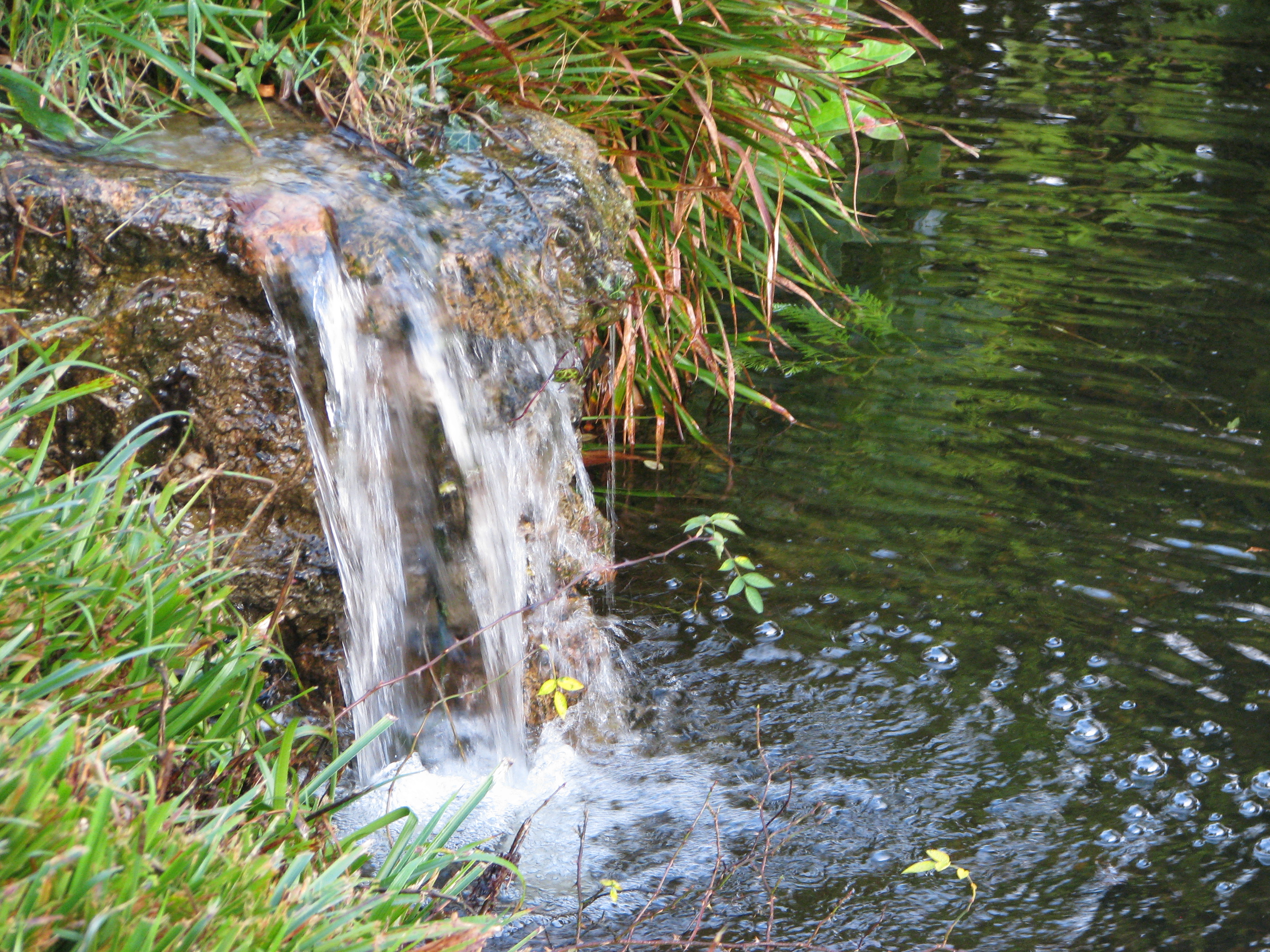
Your garden may be totally different to mine, but its gifts can be identical. Mine has a running, winding stream. Gently flowing water, tripping and falling over stones, has always soothed and refreshed me and I believe in the healing power of water. Any water. It balances and clarifies. It doesn’t matter what kind of water or where it is. It can come as a torrent, a Niagara or Angel Falls. It can roll like thunder, in crashing waves. It can be a bird bath sized pond, or taken internally in an icy glassful. But water can be magical in its life affirming effects.

So, my garden has a stream. And some trees, dappled light filtering through them. And roses, essential, for me. And dogs; rollicking, happy dogs. Birdsong. A caressing breeze…

But really, what is in it isn’t important. Except to me. It’s a personal, special place.

And, maybe not every day, but as often as I can, I go there. I visit. Usually, it’s sunny. People I have loved and who are no longer on this Earth sometimes pop in to say ‘Hi,’ and we commune.  I breathe, slowly and deeply, I sit or recline in comfort. I feel the warmth of the safe, healing sunlight on my skin. I let myself relax, really relax.

At my centre. My gut. The place where my soul resides.

IMG_8425.IMG_8424

I walk in my garden. Your special haven might be somewhere totally different; a beach or a mountain top, perhaps. But I urge you to visit it often. To get away from mundane, everyday life and recharge. There are plenty of guided meditations available if you choose that path. But if that isn’t for you, or you think you ‘can’t do it,’ just take a few minutes from your schedule, to invest in YOU. To connect. To catch your breath. You don’t have to believe in anything specific. This is for everyone.

We live in a busy, stressful world. We’re bombarded daily by bustle and noise and 24 hour news channels, filling our minds with ‘the bad stuff’ and all the things that the powers that be in our world want us to know. But life is meant for so much more than that. It is such a precious gift to simply be here. To live. To breathe.

So…pause a while, and catch your breath. Just breathe; health and wellbeing IN, stress and negativity OUT.

You’ll reap what you sow.

Can you empathize?

“You’re not a teenager anymore. Why do you have to be so moody?!” My exasperated mother would frequently cry.

She had a point. Throughout my life, my emotions have vacillated a thousand times a day. ‘Normal’ has never been my reality. I am a person of extremes. On an ordinary day, tears will rise, unbidden, to my eyes; tears of joy, tears of anger, tears of sadness or frustration. Living near to the ocean, I am familiar with its constant changes, the ebb and flow of its tides. That is exactly how my emotions work. They rise and fall like the traces on a heart monitor. More than that-they blend, separate, re-form. Maturity and self-awareness have helped me to find equilibrium, but it will never come easily.

I am an empath.

Are you made the same way?

We see beauty in ugliness, joy in misery, and poetry in the mundane. Nuances, sly glances, the non-verbal vocabulary, so often overlooked by most people, to us are vivid.

On a bus or train, I stare at people. It’s a compulsion because where others see features, a nose or a mouth; where they assess clothes and accessories and sartorial elegance, I see a spirit. A soul. I’m trying to assess them authentically; who they really are, what makes them tick, what their hopes are, their dreams, what they feel, think, dream of, want. Every person has a story. Every living thing has a tale to tell. As a writer I long to record them. I am in love with the craziness and chaos. The beauty of my surroundings.

Children fascinate me. They are tiny, vast receptacles filled with hope and unwritten potential. The exhausted, dark-circled eyes of their parents blandly acknowledge me, while I see their pride, the sheer, determined, relentless effort they put into raising their children, the love and hope that fuel their willingness to do the impossible every single day.

There’s a prism in every raindrop, a world in every grain of sand. My mind fizzes and buzzes; I am never bored.

Crowds and rooms full of strangers can literally take my breath away. I assimilate them, feeling the silent heartbeats, the pop, snap and crackle of their life force, saturating the atmosphere. At its worst it can trigger a migraine. At its best, I am filled with a sense of pure bliss.

For empaths, other people’s pain is distressing. Injustice and cruelty, affecting any living thing can move us profoundly. Not just from shared sadness but from frustration at our inability to take away the pain; to comfort and find a ‘cure,’ a solution. Other people’s pessimism and negativity can make us physically ill. Sponge-like, we absorb the vibrations until, like a drowning victim, we struggle to stay afloat; to survive. Sometimes, we have no choice but to remove ourselves from their toxicity.

Yet, no matter how badly someone else behaves, we can usually find a rationale. We want to comprehend why. Oh I don’t mean we ought to excuse it or allow it to continue, though I know I once had ‘doormat’ stamped on my forehead. An optimist, I still believe, deep down, that people, for the most part, are intrinsically good. Sometimes naïve, misinformed, lazy, desperate or badly taught, but still…fundamentally good.

An empath will see the heart in the coldness, the essence in the ignorant, the joy in the sadness, the beauty in the vile.

The cultivation of a sense of humour, the ability to find the absurd in the everyday, is vital. You can see that to be an empath can be a wonderful thing…or a nightmare.

Compassion and empathy are invaluable at any time and are essential these days. The modern ‘developed’ world celebrates the atavistic, the shallow, the trivial, the self-serving. We are bombarded daily by a money and ego-fed media making idols of the greedy and the terminally vain. We’re berated to think about number one, to seek ‘success’ in superficial, economic terms while letting the best in us, our humanity, starve and die.

In such times, as empaths, we may suffer greatly; but this crazy, broken world needs us.

More than ever.

.

Dog Crazy…Anyone else relate?

Dogs

When I saw this, I had to smile. It is so me! It was shared by the wonderful folk at ‘Off The Leash’ (http://offtheleashdogcartoons.com/), and I am grateful for something which so perfectly expresses the way I am.

I have loved dogs for as long as I can remember. My parents refused to allow me to have a dog until I was twelve. So for years before, I would offer…no; plead, to walk other peoples. I still recall every one of them and they truly enhanced my childhood. I loved each one, from tiny ‘Pixie’ to majestic ‘Sheba.’ As Landseer told us, dogs have all of man’s virtues with none of his vices. I have grieved for my beautiful, four-pawed family members just as I have for the humans. Many of my friends are every bit as fervent. We love our fur-children. Continue reading

It’s In Our Hands

Hands. We use our hands so much don’t we? They are an endemic part of our everyday language and hold a special place in our lives. How often have you heard someone say; ‘You’ve got to hand it to her…’ or maybe, ‘Hand it over?’ When a person makes a lot of money, we say they’re making it, ‘Hand over fist.’
When we care for someone, we hold their hands. We caress, and show affection and caring with our hands. They are our working tools, operating everything from a garden spade to a keyboard, whether computer or piano.

Sometimes people are annoying. Some of them are just plain nasty! At those moments Continue reading